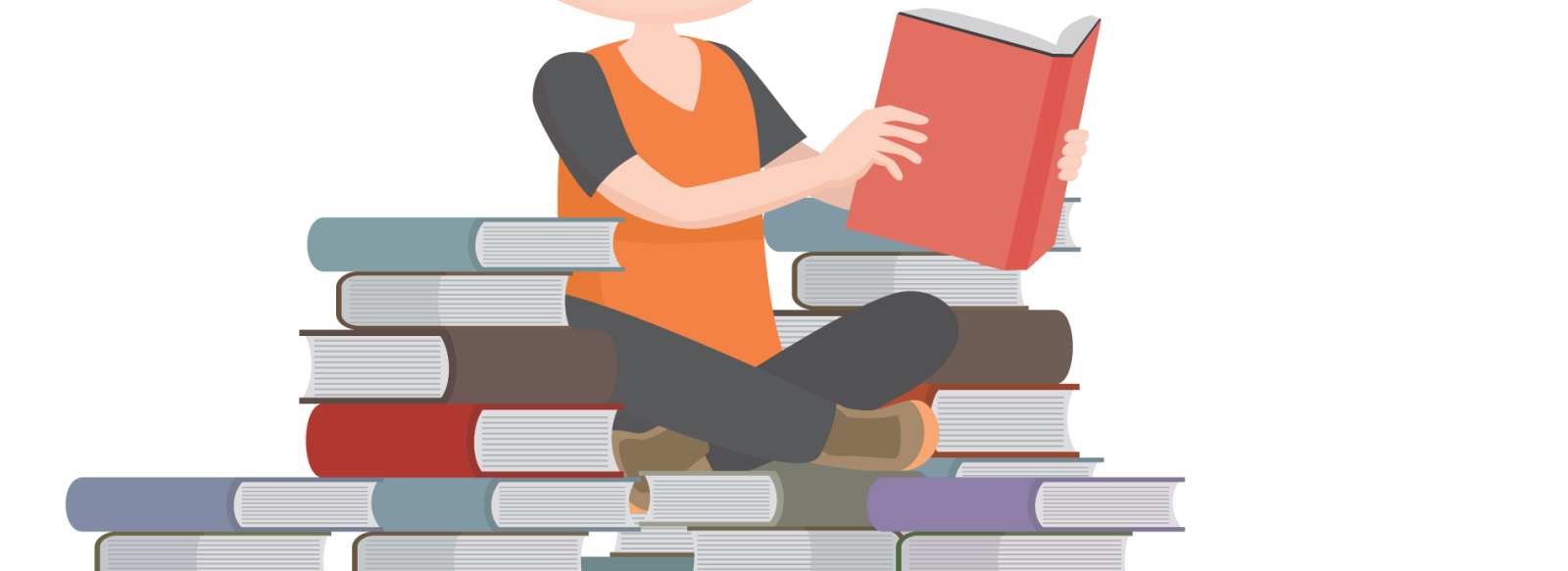
You Become What You Read, Even the Books You Forget
August 29, 2026
We often associate reading with responsibility: textbooks, assigned novels, industry articles. These are useful, of course. But the truth is, the books that shape us most deeply tend to be the ones we choose when no one is watching, when no one is grading, when the only reason we pick them up is that something inside us wants to know more.
"It is what you read when you don't have to that determines what you will be when you can't help it."
--Charles Francis Potter (1885-1962)
Found in a speech he gave in Dayton, Ohio, April 1927
That's the heart of Charles Francis Potter's quote. What you read when you don't have to—when there's no external reward or deadline—has a way of shaping you into the kind of person you'll become without even realizing it. If you reach for mystery novels, philosophical essays, or memoirs of people you admire, those choices add layers to your thinking and your perspective. They help build your identity quietly, without fanfare.
"It is what you read when you don’t have to determine what you will be when you can’t help it."
—Ralph Waldo Emerson (1803-1882)
Said by Potter to students at the University of Idaho.
Often misattributed to Oscar Wilde.
Ralph Waldo Emerson reinforces this idea in his own way. He compares the books we read to the meals we eat. We don't remember every dish we've ever had, but we know they've kept us going. In the same way, the books we consume, even those we forget, still leave a mark. Their ideas and images settle into our subconscious and help shape how we see the world. They become part of the way we process emotion, think critically, or express ourselves creatively. It's all cumulative.
And that's why this idea matters now more than ever. In a world overloaded with curated content, algorithms, and should-reads, it's easy to forget the joy of reading for no reason at all. But that kind of freedom matters. When you pick up a book simply because you want to, not because it's trending or recommended, you're feeding something essential in yourself. You're choosing curiosity over obligation, and that's a form of self-nourishment.
The point isn't to reject structure or avoid learning. It's that alongside those things, we need to leave space for what stirs us. If a novel calls to you or a strange little book in a used shop catches your eye, trust that instinct. And don't worry if, months later, you can't remember the plot. The story has already done its work.
So let yourself explore. Read what you love. Read what surprises you. And don't worry if it doesn't fit someone else's idea of "worthwhile." The books you pick up in freedom often plant the deepest roots.

I used to teach English as a foreign language in Barranquilla, Colombia. Now I'm retired and traveling throughout South America.
I'm from Kennewick, Washington, USA. In my previous life, as I call it, I was an IT guy, systems administrator, computer tech, as well as a shipping/receiving guy and also worked as a merchandising guy in a RV/Camping store.