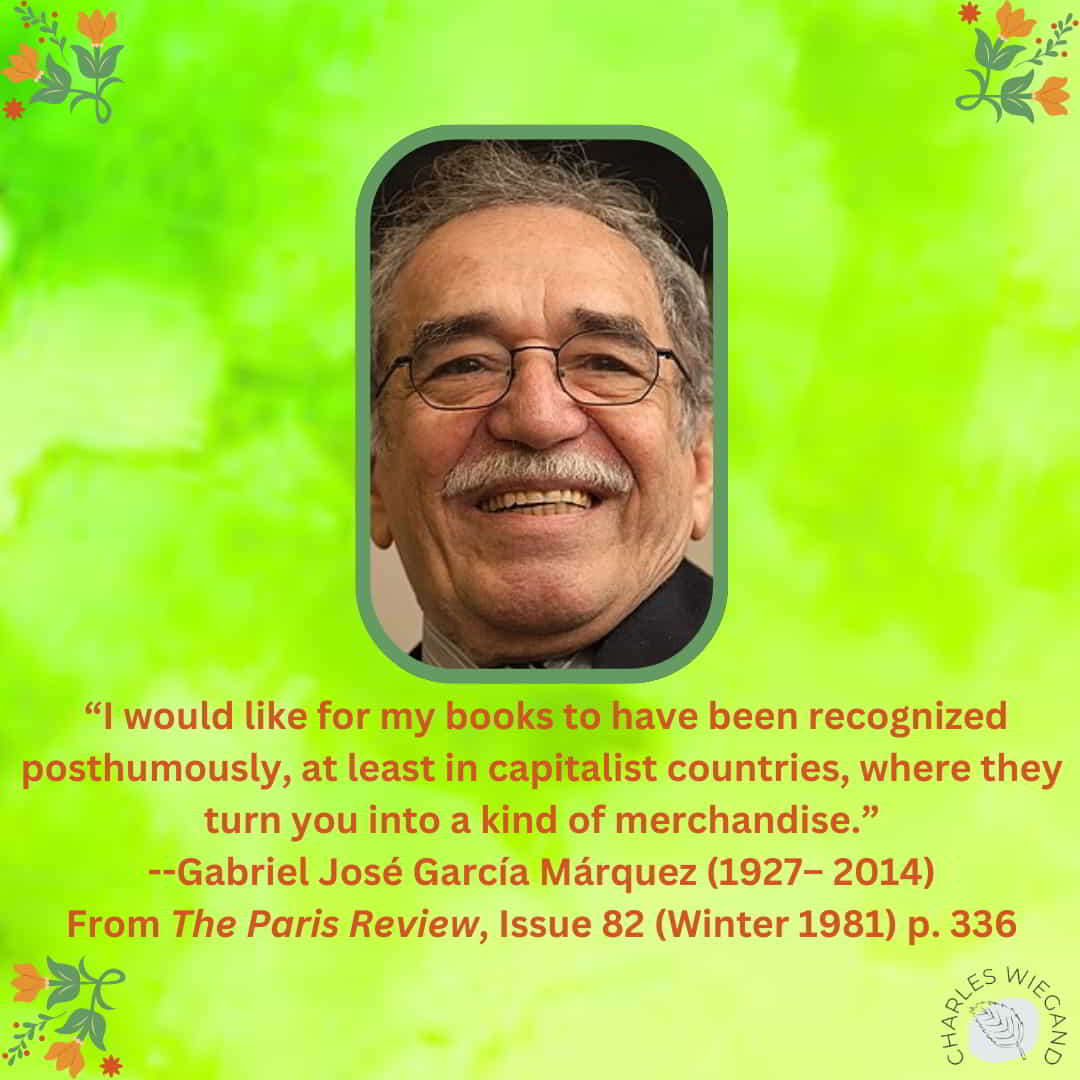
Not a Brand, Not a Product: Márquez on the Price of Literary Success
December 10, 2025
Gabriel García Márquez wasn’t just a master of magical realism, he also had a wickedly clear read on how the literary world behaves once capitalism sinks its teeth into an artist. His comment about wanting his books to be recognized posthumously lands with that trademark Márquez blend of humor and truth. He’s basically saying, “Sure, celebrate me, just don’t turn me into a brand mascot while I’m still breathing.” And honestly, who can blame him? In commercial publishing, once a writer catches on, the marketing machine starts churning: your face on posters, your name blown up larger than the book’s title, your “brand story” polished into a sales pitch. At that point, the writer becomes less a person and more a product—shelf-ready, bar-coded, and optimized for Q4 revenues.
What Márquez is nudging us to see is the tension every serious writer feels: the desire to be read versus the dread of being commodified. It’s one thing to have readers who genuinely love your work. It’s another to be packaged like literary breakfast cereal, “Now with 20% more passion and a collectible author bio!” The man was wary of losing the soul of his craft to the marketplace. And he’s right: the more commercial the culture, the more tempting it becomes for the industry to flatten a writer’s identity into something profitable, predictable, and, ironically, less interesting.
But beneath the snark is a deeper truth about why artists create in the first place. Márquez wanted his stories to stand on their own—unbothered by the noise of marketing trends and bestseller lists. He believed a book should earn its place because it resonates, not because a publisher has plastered it all over airport kiosks. Recognition after death, in his view, meant the work had survived on merit, not hype. And that’s something every writer, whether indie, midlist, or global superstar, secretly hopes for: that the stories will outlive the author, not the advertising campaign.
So when Márquez jokes about wanting acclaim only after he’s gone, he’s really making a statement about authenticity. He’s reminding us that great literature isn’t built for consumption, it’s built for connection. And if the price of being truly seen is becoming a commodity instead of a creator, he’d rather wait. Frankly, that’s about as magical, and as real—as it gets.

I used to teach English as a foreign language in Barranquilla, Colombia. Now I'm retired and traveling throughout South America.
I'm from Kennewick, Washington, USA. In my previous life, as I call it, I was an IT guy, systems administrator, computer tech, as well as a shipping/receiving guy and also worked as a merchandising guy in a RV/Camping store.